
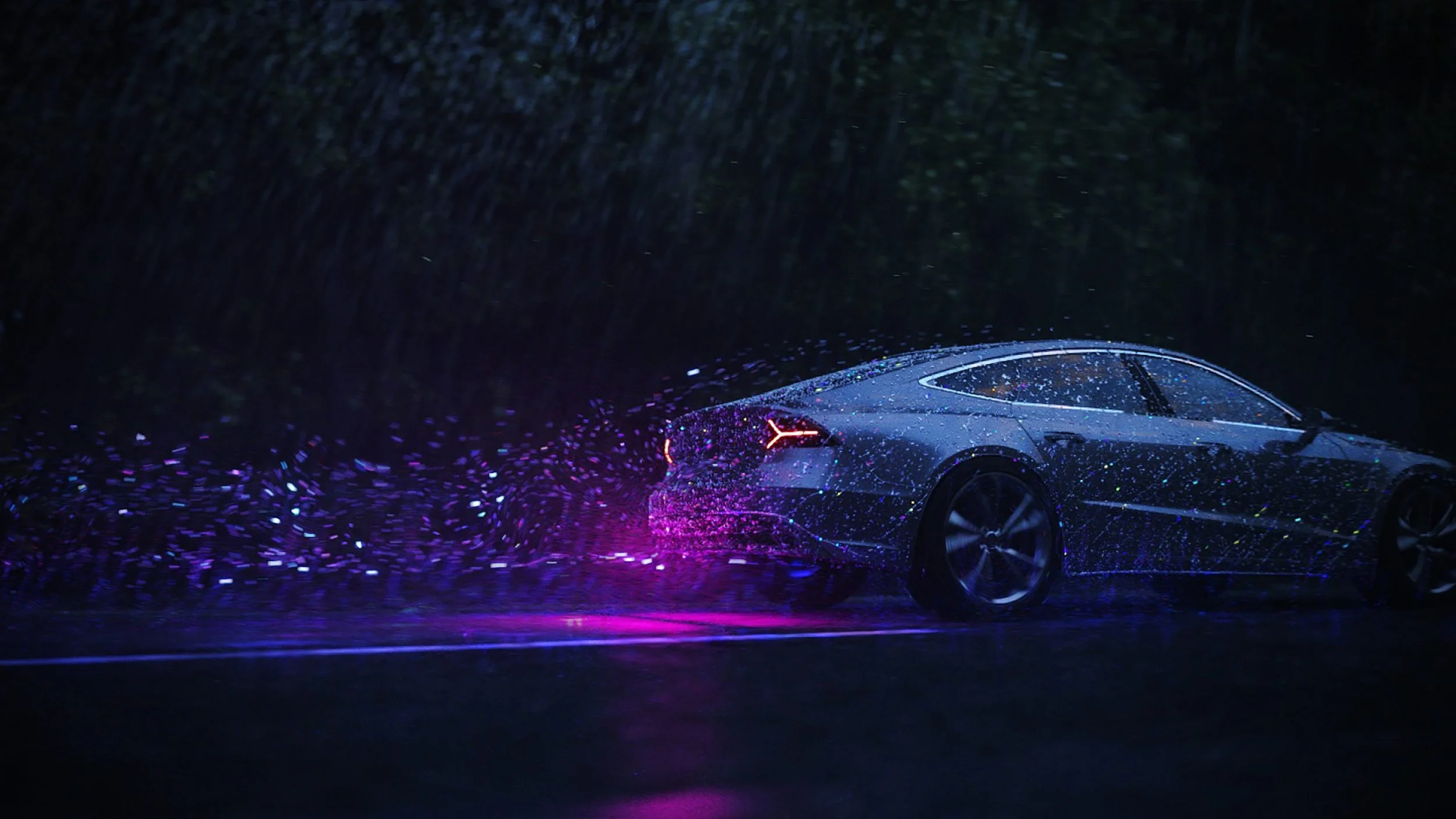
Castrol HYSPEC · Accenture Song · AW 2025
Between two worlds.
Engine lubricant is a low-interest category — but only if you look at it the wrong way. For the relaunch of Castrol HYSPEC, I found the dramatic story hidden inside the technical spec: hybrid engines live between two diametrically opposed worlds, and they needed a lubricant built for both. What started as a B2B product brief became a genuinely unexpected creative territory.
Strategy · Creative · Automotive · B2B
2025 - 2026
AUDIENCE INSIGHT AND PRODUCT POSITIONING
CREATIVE BRIEF AND REFRAME
CAMPAIGN CONCEPT DEVELOPMENT
CREATIVE PLATFORM
BRAND AND PRODUCT CHANNEL STRATEGY
TRADE AND CONSUMER EXECUTION
NARRATIVE AND VISUAL LANGUAGE
THE STORY
Between two worlds
THE SITUATION
Engine lubricant is one of the least glamorous categories in automotive. It's functional, technical, and bought on spec rather than desire. When Castrol needed to relaunch HYSPEC — their lubricant engineered specifically for hybrid engines — the instinct was to lead with credentials: the formulation, the certifications, the performance data.
The challenge was twofold: make the product emotionally compelling to an audience that had never been asked to care about it, and reach a new generation of hybrid drivers who didn't yet know that switching from a combustion engine meant their standard lubricant was no longer doing its job.
THE INSIGHT
A hybrid engine doesn't live in one world. It lives between two — combustion and electric — constantly switching, constantly adapting, operating under conditions no standard lubricant was ever designed for. HYSPEC wasn't just a better lubricant. It was the only lubricant built for an engine that exists in that tension.
THE APPROACH
Rather than leading with technical specification, I reframed the brief entirely around duality — the dramatic reality of what a hybrid engine actually does. Every hybrid on the road is running an engine that was never supposed to exist: half combustion, half electric, permanently negotiating between two opposing modes of operation.
That tension became the creative territory. Not "here's a lubricant for your hybrid." But "your engine lives between two worlds — and most lubricants were only built for one of them." It opened up a visual and narrative language that was genuinely unexpected for a product of this kind, one that could work across audience segments — from mechanics who needed the technical substance to drivers who just needed to understand why it mattered.
The resulting strategy and creative platform gave Castrol a story to tell rather than a spec sheet to defend — and surprised a client who hadn't anticipated that a technical brief could produce this kind of territory.
THE WORK COVERED